Emajõgi Great Bog
The area offers visitors a chance to discover the diversity of Estonia's bog landscapes and heritage culture.
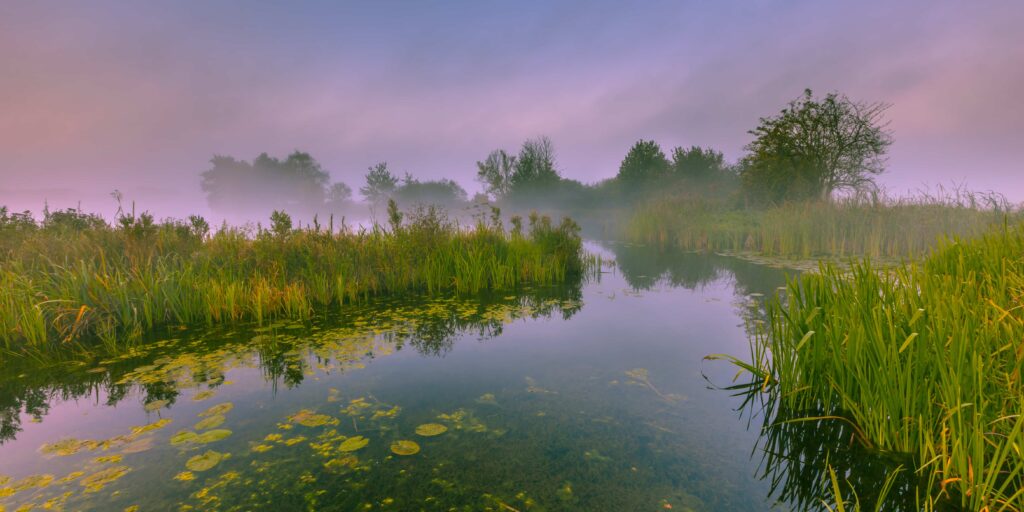
The Emajõgi Great Bog is Estonia’s largest delta wetland, located in Tartu County in the Lake Peipsi basin. This 13,000-hectare natural area consists of several bog sections separated by tributaries and side branches of the Emajõgi river.
The wetland is one of the oldest and most protected natural areas in Estonia, established as a nature reserve in 1981. Its unique water network and rich wildlife make the area important from both conservation and scientific perspectives.
The article covers the wetland’s natural values, the human activity that takes place there, and the opportunities for capturing nature on camera.
The nature and importance of Emajõgi Great Bog
The Emajõgi Great Bog represents the largest delta wetland in Estonia, situated in the Lake Peipsi basin and covering approximately 1,000 km². The diverse ecosystems of this wetland and its protected-area status make it an extremely important region for Estonian nature conservation.
Location and extent
The Emajõgi Great Bog is situated in Tartu County in the delta region of the Suur-Emajõgi river. It is the largest delta in Estonia, formed at the mouth of the Emajõgi on the shores of Lake Peipsi.
The wetland’s total area is about 1,000 km². This makes it Estonia’s largest wetland system and one of its most important wetlands.
The wetland is divided by tributaries and branches of the Emajõgi river. These watercourses split the area into different bog flats.
The Emajõgi Great Bog forms the core of the Peipsiveere Nature Reserve. It is also a very important natural area in a European context.
Diversity of bog types
The Emajõgi Great Bog consists of several different wetland sections:
- Jõmmsoo
- Suursoo
- Varnja Bog
- Other smaller bog areas
The wetland formed through the paludification of land. Its water regime is mainly determined by the water levels of Lake Peipsi and the Emajõgi.
The various bog types provide habitats for many plant and animal species. Pristine nature and rich forest fauna are found here.
History of the protected area
The Emajõgi Great Bog is one of Estonia’s older wetlands. Its formation is linked to the long-term development of the Emajõgi delta.
An official protected area was established in 1981 to protect the wetland. This step was necessary to preserve the unique nature of the region.
Currently, the Emajõgi Great Bog is the largest part of the Peipsiveere Nature Reserve. This status ensures long-term protection of the area.
The protected area is important for both Estonian and European nature conservation. Continuous ecological research and nature education take place here.
Water network and landscape
The water network of the Emajõgi Great Bog consists mainly of the Emajõgi and its tributaries, plus eight lakes and 80 islands. Floodwater shapes the landscape and influences the entire ecosystem.
Rivers and streams
The Emajõgi is the main watercourse of the area, flowing into Lake Peipsi. The river flows through the entire wetland and creates the delta landscape.
The Suur-Emajõgi branch is one of the most important watercourses in the area. This branch carries most of the water during spring floods.
The Porijõgi connects the wetland to areas in the west. The river brings additional water especially in autumn and spring periods.
Smaller streams and ditches connect the lakes and islands to each other. These watercourses change seasonally and depend largely on rainfall amounts.
Spring snowmelt raises water levels in all rivers significantly. In summer, river flow decreases substantially.
The role of islands and lakes
The wetland contains eight main lakes: Lake Kalli, Lake Leegu, Lake Äijärv, Lake Sirkjärv, Lake Soitsejärv, Lake Võngjärv, Lake Ahijärv and Lake Koosa.
Lake Leegu and Lake Kalli are the largest bodies of water in the area. These lakes act as the main water reservoirs.
Lake Soitsejärv and Lake Võngjärv lie in the central section and connect different parts of the wetland. Lake Ahijärv and Lake Sirkjärv are smaller but important for birdlife.
80 bog islands form a complex landscape. The islands stand 1–2 metres higher than the surrounding bog landscape.
The lakes regulate water levels and prevent sudden changes. They also act as collection points for sediments.
Effect of floodwater on the landscape
Spring floods cover almost the entire 25,000-hectare area with water. About 7,000 hectares are regularly flooded.
Floodwater brings nutrients and sediments. This process enriches the soil and maintains the wetland’s fertility.
In spring the water level rises 1–2 metres above normal. Such change affects the entire flora and fauna of the area.
In summer the water level drops, exposing new areas. Autumn rains raise the level again, though not as high as in spring.
Regular flooding has shaped the landscape for thousands of years. This process continues today.
Rich wildlife and conservation
The Emajõgi Great Bog is home to more than 176 bird species and eight amphibian and reptile species. The protected-area status ensures the survival of this unique ecosystem for future generations.
Diversity of plants and animals
The Emajõgi Great Bog is home to 176 bird species, of which 141 nest in the area. This delta wetland serves as an important stopover for migratory species.
Eight amphibian and reptile species live in the bog. All these species are protected.
The wetland provides habitat for various waterbirds. They find suitable nesting and feeding sites here.
Plants have adapted to the wetland’s special conditions. The bog soil is rich in nutrients, which favours plant growth.
The value of protected species
The Emajõgi Great Bog was placed under nature protection in 1981. The protected area covers 18,130 hectares.
Amphibians and reptiles need special attention. They are highly sensitive to environmental change.
For waterbirds this area is vitally important. Many endangered species depend on the habitats here.
Conservation ensures the survival of rare and endangered species. It helps maintain natural balance in the wetland.
The importance of large and small islands
The wetland contains 80 bog islands and 8 lakes. These islands offer varied habitats for animals and plants.
Larger islands serve as nesting sites. Smaller islands provide shelter and feeding grounds.
Animals moving between islands use different habitats. This helps ensure species’ genetic diversity.
Lakes and islands form a complex ecosystem. This system supports great species richness in the wetland.
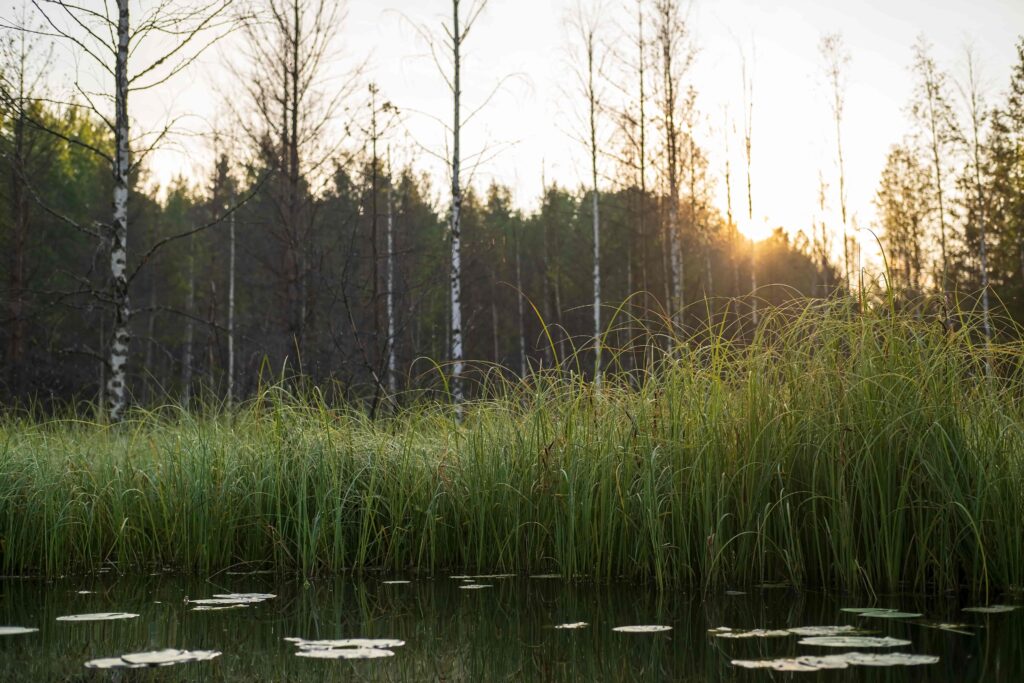
Human activity and heritage culture
The Emajõgi Great Bog has developed a rich heritage culture over the centuries, shaped by the lives of local people in and around the wetland. Kavastu village played an important role in using the wetland and preserving its traditions.
Historical events and achievements
The Emajõgi Great Bog area was settled as early as the Middle Ages. Local inhabitants learned to live in the harsh conditions of the wetland.
The main activities were:
- Peat cutting – local fuel
- Cranberry picking – an important source of income
- Fishing – use of the Emajõgi and smaller bodies of water
- Haymaking – meadows on the wetland edges
The bog islands formed a unique living environment. Each island had its own name and stories associated with it.
- In the 20th century the area began to change. Drainage works affected the traditional way of life. Many old customs and knowledge disappeared.
The role of Kavastu village
Kavastu village was one of the most important settlements of the Emajõgi Great Bog in Tartu County. The village was on the edge of the wetland and its inhabitants knew the wetland conditions well.
The villagers were mainly engaged in:
- Use of the wetland’s natural resources
- Cranberry trade
- Serving tourists
Kavastu inhabitants preserved the lore of stories tied to the bog islands. These tales told of the islands’ history and the people who lived there.
The village was also a gateway to the wetland. Most hiking trails and waterways started there. Locals knew the best places and the safest routes.
Modern use and travel
The Emajõgi Great Bog is today a popular hiking area. Visitors can experience nature-based tourism.
Main activities:
- Hiking trails – marked paths in the bog
- Canoe trips – use of the Emajõgi and canals
- Nature observation – bird watching and study of vegetation
- Educational programmes – environmental education
The Emajõgi Great Bog Centre offers visitors information and guide services. The centre introduces the wetland’s nature and history.
Today efforts are made to maintain a balance between tourism and conservation. Visitor numbers are limited in certain areas.
Nature photography opportunities
The Emajõgi Great Bog offers rich opportunities for capturing nature throughout the year. The area’s diverse nature and skilled local photographers have created a strong basis for high-quality nature photography.
The importance of nature photography in the area
Nature photography plays an important role in introducing and protecting the area’s nature. Photos help people understand the unique ecosystem of the great bog.
Local nature photography documents rare plant and animal species. Pictures of black storks, whooper swans and other birds show the biodiversity of the area.
Photos are also important from an educational perspective. They help teach people the importance of wetlands.
Main aims of photography:
- Promoting nature conservation
- Developing tourism
- Scientific documentation
- Environmental education
Best places to photograph
Bird-watching towers offer excellent opportunities for overview shots. From the towers you can see far across the bogs and lakes.
Main lakes for photography:
- Lake Leegu
- Lake Kalli
- 5 smaller lakes
Early morning and evening hours give the best light for photos. Then nature is most beautiful and animals more active.
From a SUP board you can take interesting on-the-water shots. This gives a new perspective on the great bog landscape.
Many good photo spots can be found along the boardwalks. It’s easy to move and transport equipment there.
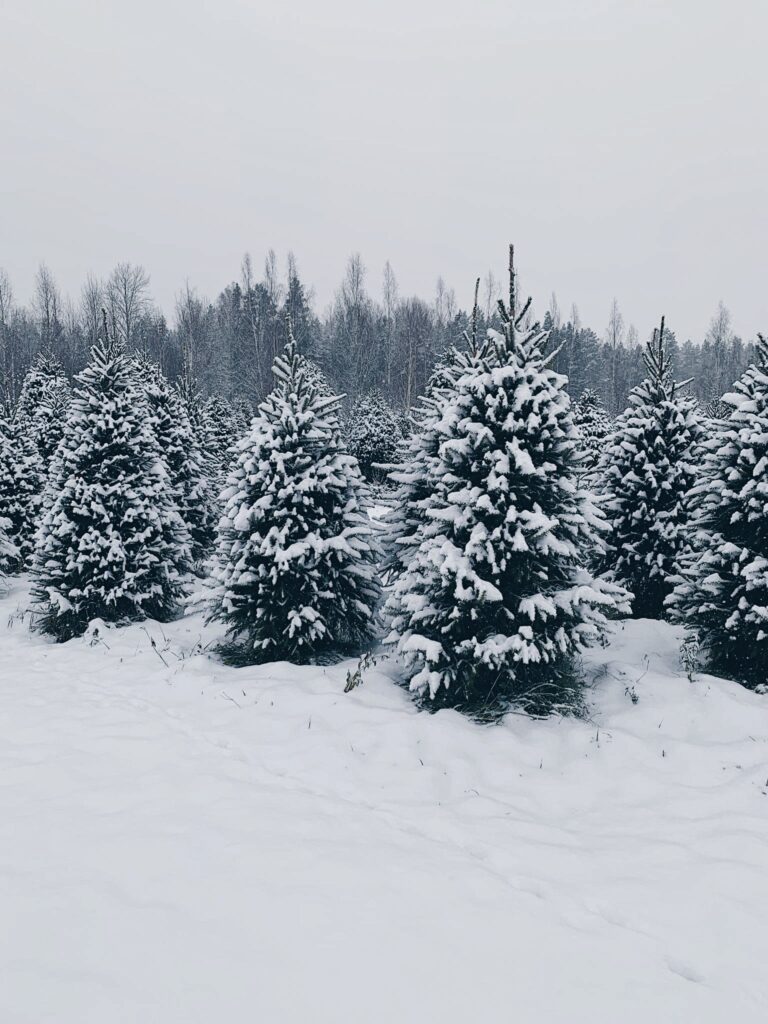
In winter the icy landscape offers different opportunities. Snow turns the great bog into a completely different photo subject.